I have worked in a lot of pharmacies. In some of them, the job came down to counting by fives and letting a machine do the rest. That is what most people picture when they think of a pharmacist, and I understand why. The counting is the part you can see.
Last week was National Pharmacy Week, and I want to show you the part you cannot see. At Nashville General Hospital, pharmacists are involved in nearly every step between a provider’s decision and a medication reaching a patient.
Before the prescription is written
Nashville General is a teaching hospital. Many of the providers on our floors are residents, learning to prescribe: the right drug, the right dose, the right indication. Our system is built with that in mind.
We have four clinical pharmacists whose job is not dispensing at all. They review patient charts and consult with providers and residents to make sure each regimen is safe and appropriate. Did the dose account for the patient’s kidney function? Is this the right antibiotic, or can we step down to something narrower so we are not building resistance? Is the pain medication matched to the level of pain, and is it the safest choice for this person over the long run?
Those questions get asked as orders are written, and again when we review them. Pharmacy is on both sides of that.
Why being inside the hospital matters
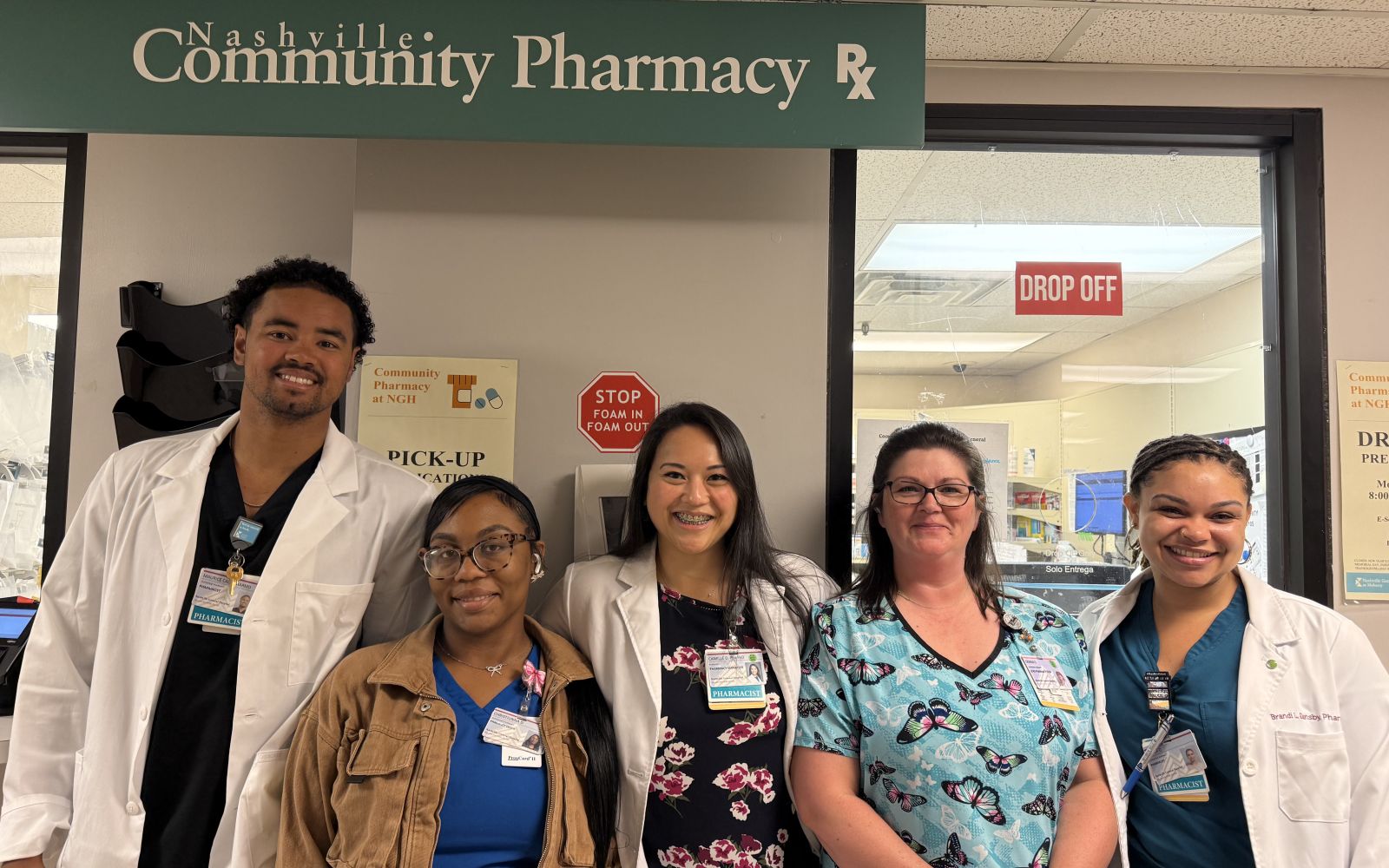
Camille Dao, PharmD, who manages our Community Pharmacy, put it this way: “I can’t tell you how many times a day I’ll call up there and say, hey, what do you think about this dosing?”
That phone call is the whole point. A pharmacy outside a hospital does not have the patient’s record in front of it. We do. We know what labs were drawn right before the prescription was written. If something looks off, we do not leave a message and wait. We put it in a shared channel, someone looks, and we fix it.
We are small enough that we know each other. In practice that is the difference between a question answered in minutes and a question answered tomorrow.