Why Your Medication Needs Prior Authorization, and What We Do About It
The two words that stand between a prescription and your front door, and how our team gets through them in about 24 hours.
November 9, 2026

If your doctor has ever told you a medication "needs a PA," here is what that means and what happens next.
A prior authorization is a form we send to your insurance company explaining why you need the medication your provider prescribed. Insurers require it for medications that are expensive, need special handling, or need monitoring while you take them. Most specialty medications fall into all three categories.
Someone asked me recently whether I could think of a prior authorization I had to fight for. That is every PA. So we built a team around it.
What the process looks like from your side
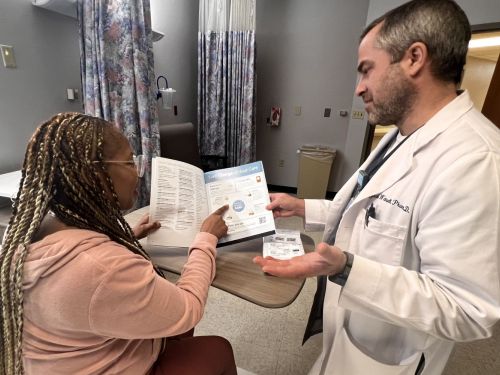
Your specialist writes the prescription and sends it to us. Usually they tell you in the office: this one needs a PA, we are sending it to our pharmacy, they will take care of you.
From there, our team takes over, together with our partner CarepathRx, which supports the clinical side of the work: the authorization, counseling and shipping logistics. Our staff on site handles the insurance and billing. Our turnaround is typically 24 hours. For a complicated case, you will hear from us within a week. Either way, you hear from us. We let you and your provider know whether the insurer approved or denied it, and if it is denied, we tell your provider what the insurer prefers instead.
Once it is approved, we call you to set up pickup or delivery. In most cases you have the medication in hand within about 48 hours of the prescription reaching us.
Why that fast? Because we have access to the hospital's electronic medical record. We do the authorization with your chart in front of us, not waiting on a fax from someone else's office. My colleague Beauman Dick wrote about what that access means for every pharmacist at Nashville General.
The one thing that slows everything down
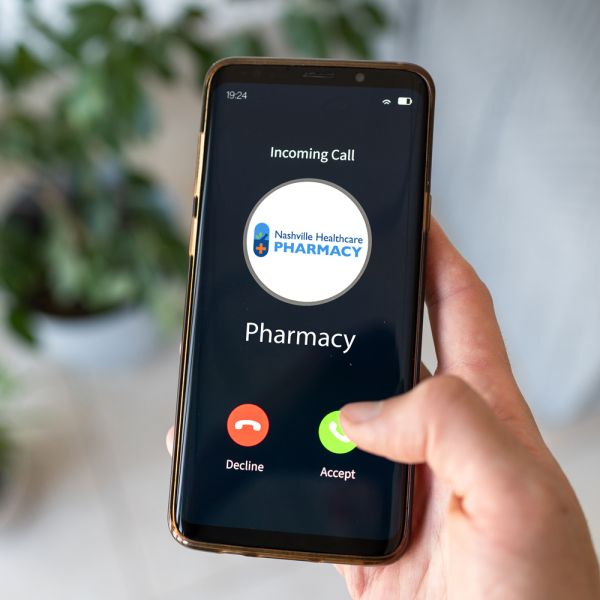
Answer your phone.
We can get through the entire authorization, and if we cannot reach you to confirm shipping and go over the medication, nothing moves. The call from us is the last step before your medication ships.
Why we keep calling
Specialty medications require follow-up. On those calls we ask about side effects, check your labs, and make sure your next refill is coming. We also watch the authorization itself so it does not expire before your next fill. An approval has a term. Part of our job is making sure you never find out what happens when it lapses.
If delivery is the right choice
About 80 to 90 percent of our specialty patients have their medication shipped. We ship anywhere in Tennessee, next day, before 8 p.m.
Many specialty medications have to stay cold. We pack them with the right amount of ice for the season, and they are good for about two days outside a refrigerator. Inside the box is a small temperature tag. If you open the package and the tag is pink, the medication got too warm in transit. Do not take it. Call us.
What if the price is impossible
If the approval comes back and your share of the cost is something no one could pay, we go back to your provider. Often there is a different medication in the same class that the insurer covers better, and we work out the switch.
For serious conditions like cancer or rheumatoid arthritis, we look for grants. One of our oncology patients was facing around $10,000 for a one-month supply after insurance. We found a grant. That is not unusual for us.
If you do not have insurance, there are manufacturer patient assistance programs, and we handle the application. We fill out the pharmacy and provider portions, you complete your part, and we send it. Camille Dao, who manages our Community Pharmacy at the main hospital, wrote about what to do when you cannot afford a prescription, and most of it applies here too.
When we do not have the drug yet
Some specialty medications are restricted to certain pharmacies. If we do not yet have access to one your provider prescribes, we request it. If we cannot get it within about a week, we transfer the prescription to a pharmacy that has it and keep working on access. When we get it, we call you and ask whether you would like to transfer back. You are never left wondering where your prescription is.
Why we do it this way
Nashville Healthcare Pharmacy is small, and we like it that way. We know our patients. When you call for a refill and your doctor is down the hall, we walk over and ask. It is the same idea behind bringing discharge medications to a patient's hospital room: the pharmacist should come to you. When a provider at Nashville General prescribes a specialty medication, the patient gets it fast, and someone is watching the whole way through.
Nashville Healthcare Pharmacy is located at Metro Center inside the primary care office. A pharmacist is available by phone 24 hours a day for patients on specialty medications. Call 615-810-8536.


Meet The Expert
Dolagi Aiyad, PharmD Pharmacy Manager, Nashville Healthcare Pharmacy
Dolagi Aiyad manages Nashville Healthcare Pharmacy at Metro Center, including its specialty pharmacy service. Her focus is a pharmacy where patients feel comfortable asking questions, where medications are explained rather than handed over, and where safety, accuracy and trust guide every fill.