

Neurology

Advanced care for brain and nervous system disorders, offering personalized treatments to improve neurological health and quality of life.

The Neurology team at Nashville General Hospital specializes in diagnosing and treating conditions of the brain, spinal cord, and nervous system. Our board-certified neurologists understand that neurological symptoms — unexplained tremors, persistent headaches, memory changes — can feel frightening and confusing. That's why our team works closely with each patient and their family to identify the underlying cause and develop a personalized care plan. From migraines and epilepsy to Parkinson's disease and multiple sclerosis, we provide compassionate, expert care to help you understand your condition and manage it with confidence.

Conditions We Treat

The neurological conditions we treat include:

  • Alzheimer's Disease
  • Cognitive disorders
  • Dementia
  • Dystonia
  • Epilepsy
  • Essential tremors
  • Headaches
  • Huntington’s disease
  • Migraine Headaches
  • Multiple Sclerosis (MS) and Neuro-Immunologic disease
  • Parkinson's Disease
  • Other Movement Disorders

Tests, Treatments & Services

Our neurology team offers a full range of diagnostic tools and treatment options to help identify what's happening and create a plan that works for you.

Neurological Evaluation

A thorough review of your symptoms, medical history, and neurological function to identify the source of your condition.

EEG (Electroencephalogram)

A painless test that records electrical activity in the brain, commonly used to evaluate seizures, epilepsy, and other brain conditions.

EMG & Nerve Conduction Studies

Tests that assess the health of muscles and the nerves controlling them — often used when you have numbness, tingling, weakness, or unexplained pain.

MRI & CT Imaging

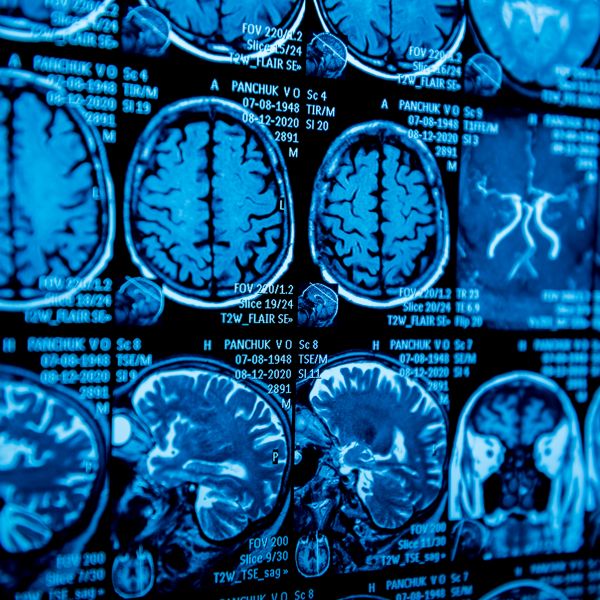
Brain and spine imaging that helps your provider identify strokes, inflammation, nerve compression, and other structural concerns.

Medication Management

Ongoing evaluation and adjustment of medications to help manage chronic neurological conditions and improve quality of life.

Ongoing & Follow-Up Care

Coordinated long-term care for patients managing complex or progressive neurological conditions.

Photo by Matteo Vistocco on Unsplash

Understanding Migraines

Migraines are more than a bad headache. They're a neurological condition that can cause intense, throbbing pain — often on one side of the head — along with nausea, light sensitivity, and dizziness. For many people, migraines interfere with work, family, and daily life. 

The good news is that migraines are treatable. Our neurology team can help identify your triggers, evaluate your symptoms, and develop a plan to reduce how often migraines happen and how severe they are when they do. CTA Label: Read: Relief from Migraines

Read: Relief from Migraines

Parkinson's Disease

Parkinson's disease is a progressive neurological condition that affects how the brain controls movement. Symptoms often begin subtly — a slight hand tremor, muscle stiffness, or a gradual slowing of movement. Over time, symptoms can affect both sides of the body and impact daily tasks. 

Early diagnosis and ongoing management are important. Our team works with patients and families to understand each person's specific symptoms and build a care plan that supports daily function and quality of life. For more information and support resources, visit the Parkinson's Foundation. 

Visit the Parkinson's Foundation

Alzheimer's Disease & Memory Care

Alzheimer's disease is a brain condition that affects memory, thinking, and the ability to carry out everyday tasks. It often begins with mild forgetfulness and can progress gradually over time. While there is no cure, early diagnosis can make a meaningful difference — for both patients and families. 

Our neurology team can evaluate memory concerns, help determine the cause, and connect patients with the resources and support they need. For more information about Alzheimer's disease, the Alzheimer's Association offers trusted guidance for patients and caregivers.

Visit the Alzheimer's Association

Multiple Sclerosis & Neuro-Immunologic Disease

Multiple sclerosis (MS) is a condition in which the immune system attacks the protective covering of nerve fibers, disrupting communication between the brain and the rest of the body. Symptoms vary widely from person to person and can include fatigue, vision changes, numbness, and difficulty with balance or coordination. 

Our neurology team provides evaluation and ongoing care for patients with MS and related neuro-immunologic conditions. The National MS Society offers trusted information and support resources for patients and families.

Visit the National MS Society

Frequently Asked Questions

What conditions does the NGH Neurology team treat?

Our neurologists care for a wide range of brain and nervous system conditions, including migraines, epilepsy, Parkinson's disease, Alzheimer's disease, multiple sclerosis, essential tremors, dementia, neuropathy, and stroke, among others. If you're experiencing unexplained neurological symptoms, we can help determine the cause.

What should I bring to my neurology appointment?

Please bring a photo ID, your insurance card, a list of current medications (including dosages), and any prior imaging reports such as MRI or CT scans. If your provider gave you a referral, bring that as well. It can also help to write down your symptoms — when they started, how often they occur, and anything that makes them better or worse. If memory or mobility is a concern, bringing a family member or caregiver is encouraged. Arriving 15 minutes early to complete paperwork is appreciated.

What types of diagnostic tests might be ordered?

Depending on your symptoms, your neurologist may order an MRI or CT scan to look at the brain or spine, an EEG to evaluate brain activity, an EMG or nerve conduction study to assess muscle and nerve function, or blood tests. Your provider will explain which tests are appropriate for your situation and what to expect.

What is an EEG, and why would I need one?

An EEG (electroencephalogram) is a painless, non-invasive test that records electrical activity in the brain. It is commonly used to evaluate seizures, epilepsy, and episodes of altered awareness. During the test, small sensors are placed on your scalp to detect brain wave patterns. Most EEGs take between 30 and 60 minutes.

What is an EMG, and what does it test?

An EMG (electromyography) measures how well the muscles and the nerves controlling them are working. It is often ordered when a patient has unexplained numbness, tingling, weakness, cramping, or pain — to help determine whether the issue is coming from a nerve, a muscle, or both. Your provider will walk you through what to expect based on your specific situation.

Do neurologists treat headaches and migraines?

Yes. Our neurology team evaluates headache patterns to determine whether they are migraines, tension headaches, cluster headaches, or related to another neurological condition — and creates a treatment plan tailored to you. If you've been living with frequent or severe headaches, a neurology evaluation can help identify the cause and find relief.

When should I seek emergency care for a neurological symptom?

Some neurological symptoms require immediate attention. Call 911 or go to the nearest emergency room right away if you or someone else experiences sudden weakness or numbness on one side of the body, sudden confusion or trouble speaking, a severe and sudden headache unlike any before, changes in vision, a prolonged seizure, or loss of consciousness. These can be signs of a stroke or other serious condition that requires emergency care.

Do I need a referral to see a neurologist?

That depends on your insurance plan. Some plans require a referral from your primary care provider, while others do not. Please check with your insurance company before your visit. If a referral or prior authorization is needed, our team can help guide you through that process.

How do I schedule or cancel an appointment?

Call our Neurology team directly at 615-341-4210 to schedule, reschedule, or cancel an appointment. You can also ask your primary care provider to submit a referral on your behalf. We ask for at least 24 hours' notice for cancellations when possible.

What insurance plans do you accept?

We accept most major insurance plans. If you have questions about coverage, visit our Billing & Insurance page or call 615-341-4968 before your visit.

How do I access my test results or send a message to my provider?

You can view test results, send messages to your care team, and manage your care through the HealtheLife Patient Portal. Ask our front desk team during your visit to get set up if you haven't already.

Locations

Neurology Main

Hours
Mon - Thu: 8:00 am-4:30 pm
Fri: 8:00 am-12:30 pm
Address

1818 Albion Street
Nashville, TN 37208
United States

Contact
Phone Number

Related Articles

Related Articles